Sneakers and Pointe Shoes: A Designer Review
As a professional embroidery designer who has spent years refining brand identity for small businesses, I approach every new machine embroidery design with a critical eye. Today, I am reviewing the Sneakers and Pointe Shoes digital file. This design sits at an interesting intersection of movement, style, and craftsmanship. While the title suggests a specific niche within the Dance category, its visual potential extends far beyond the studio floor. For owners of boutique shops, apparel decorators, and Etsy sellers looking to elevate their small business merch, understanding how this embroidery file performs in real-world applications is crucial before committing to production.
First Impressions: Balancing Playfulness and Professionalism
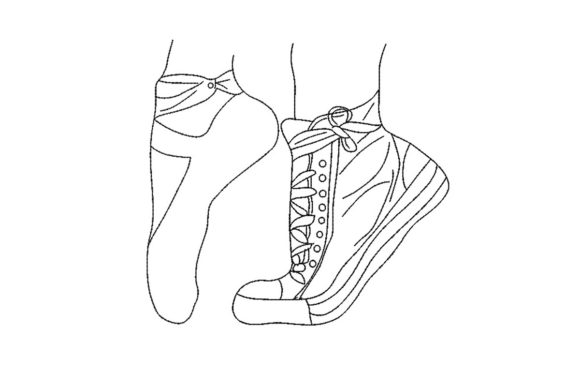
When I first loaded the Sneakers and Pointe Shoes design into my digitizing software, the immediate impression was one of dynamic contrast. The juxtaposition of athletic sneakers with elegant pointe shoes creates a narrative that feels both modern and classic. It does not feel rustic or overly decorative; instead, it carries a bold, playful energy that can be easily adapted to appear premium depending on the execution. For a creative studio or a handmade brand, this design offers a unique opportunity to signal versatility. It suggests that your business values both hard work (the sneakers) and refined artistry (the pointe shoes).
The description notes that you "can choose the color scheme at your discretion," which is a significant advantage for maintaining visual consistency across your brand assets. Whether you are aiming for a monochromatic, high-end look or a vibrant, youthful palette, the underlying structure of the design supports various interpretations. However, as a designer, I always caution that the final look depends heavily on the thread colors selected and the quality of the finished product. A poorly chosen thread combination can make the design look muddy, while a strategic selection enhances the perceived value of the item.
Real-World Business Applications
Let’s move beyond the screen and discuss where Sneakers and Pointe Shoes truly shines in commercial settings. This design is versatile enough to serve multiple functions for a growing business.
- Embroidered Patches: One of the most effective uses for this design is as a detachable embroidered patch. Imagine a local dancewear boutique offering these patches as add-ons for denim jackets or tote bags. The distinct shapes of the shoes stand out well against fabric backgrounds, making them excellent for customer gifts or event merchandise.
- Staff Uniforms and Aprons: For a café or bakery that wants to inject personality into their staff attire, this design works beautifully as an accent on aprons or work shirts. Placed on the chest pocket or sleeve, it adds a touch of character without overwhelming the uniform. It transforms standard custom apparel into branded gear that tells a story about the team's spirit.
- Cap Embroidery: If you are producing caps for a sports club or a dance team, this design fits the curvature of a cap front reasonably well, provided the size is adjusted correctly. It serves as a memorable logo alternative to text-heavy designs.
- Tote Bag Design: As the product description mentions decorating "clothes and interior items," this design is perfect for canvas tote bags. A large-scale version centered on a bag makes for a stylish accessory that doubles as mobile advertising for your brand.
Critical Considerations for Production
While the concept is strong, practical application requires careful planning. There are specific scenarios where Sneakers and Pointe Shoes must be used with caution to avoid production issues.
Size and Detail Limitations
Do not attempt to use this design at very small sizes. The details of the laces on the sneakers and the ribbons on the pointe shoes require sufficient space to render clearly. If you shrink the design too much for a tiny cap embroidery placement, the stitches may blur together, creating a messy appearance. Always check the minimum recommended size before scaling down.
Fabric Texture and Stabilization
The success of any commercial embroidery project relies on the relationship between the design and the fabric. On textured fabrics like heavy fleece or thick canvas, fine details can get lost. You must use the proper stabilizer to ensure the design lays flat. For items that need frequent washing, such as aprons or uniforms, test the washability of the threads and the durability of the stitching. High stitch density areas might cause puckering on lighter materials if not balanced correctly.
Color Contrast and Visibility
Since the design allows for custom color schemes, ensure there is adequate contrast between the design and the background fabric. A light gray shoe on a white shirt will disappear, defeating the purpose of branding. Always review the thread colors against the actual material swatch under different lighting conditions.
Impact on Brand Identity and Customer Trust
In the competitive world of handmade products and small business merchandise, every detail counts. Using a well-executed design like Sneakers and Pointe Shoes signals professionalism. It shows customers that you care about the quality of your design assets. When a client sees a crisp, well-defined logo on a high-quality patch or a neatly stitched apron, their trust in your brand increases. This attention to detail enhances the perceived value of your products, allowing you to command higher prices.
Furthermore, consistent use of this motif across different mediums—caps, bags, shirts—builds recognition. Customers begin to associate the imagery with your brand, fostering loyalty. Whether you are selling digital files or physical goods, the visual presentation is key to buyer engagement.
Practical Designer Notes for Implementation
Before you finalize your order or start production, follow these essential steps to ensure the best results:
- Test in Black and White: Before selecting colors, view the design in grayscale to assess the balance of dark and light areas. This helps identify potential gaps or overly dense sections.
- Verify Hoop Size: Confirm that the hoop size required for the full design fits your machine and the garment area you intend to embroider. Some large designs may require multi-hooping, which can introduce alignment errors.
- Create a Printable Mockup: Generate a printable mockup showing the design on the intended product. Send this to clients for approval before cutting any thread. This saves time and money on rework.
- Check Licensing: Ensure you have the correct commercial embroidery license. If you are using this for resale items, verify that the terms allow for unlimited production or the specific quantity you plan to make.
- Inspect Spacing: Review the spacing between the two shoe elements. If they are too close, they might merge during stitching; if too far, the design may look disjointed.
- Test on Real Fabric: Never skip the test run. Stitch a sample on the exact fabric and stabilizer you plan to use. This reveals issues with tension, registration, and fabric distortion.
The Sneakers and Pointe Shoes design offers a fantastic opportunity for small business owners to create unique, branded items that stand out. By respecting the technical requirements of Embroidery and focusing on quality execution, you can turn this creative concept into a profitable asset for your brand. Remember, the right selection of materials and careful planning are what separate a good design from a great business tool.