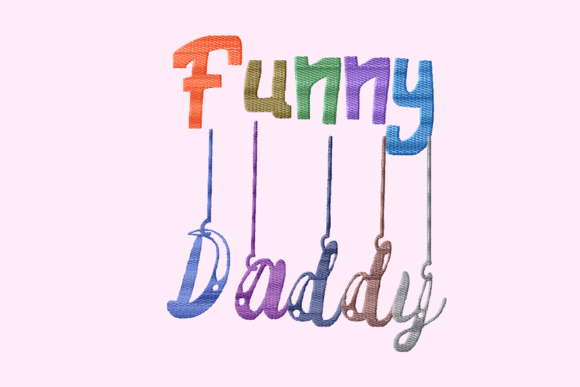
Funny Daddy: A Professional Embroidery Design Review
As an experienced embroidery designer who has spent years refining commercial embroidery for boutiques, cafes, and handmade brands, I approach every new machine embroidery design with a critical eye. The goal is never just to make something look pretty; it is to ensure the asset works hard for a business. Today, I am reviewing a design titled Funny Daddy. At first glance, the product description promises an "adorable" accent that adds a "sweet but masculine touch." For small business owners and merch creators, this specific blend of playfulness and masculinity is a powerful tool when applied correctly. Let's dive into how this digital embroidery file performs in real-world business scenarios.
First Impressions: Balancing Playfulness and Brand Identity
When I first loaded the Funny Daddy design onto my digitizing software, the visual personality was immediately clear. It leans heavily into the Father category, which is a massive market segment for seasonal events like Father's Day, family reunions, and corporate gifting. The design feels friendly and approachable rather than overly formal or stiff. In the world of brand identity, this is crucial. If your business sells custom apparel or handmade goods, you want your customers to feel a connection. A design that is too serious can alienate buyers looking for fun gifts, while one that is too chaotic can look unprofessional.
Funny Daddy strikes a balance. It suggests a rustic, handmade aesthetic that pairs well with organic fabrics like canvas, denim, and cotton twill. This makes it an excellent candidate for small business merch where the "crafted by hand" vibe is part of the selling point. However, as a designer, I must note that "adorable" can sometimes translate to "detailed." Before committing to production, we need to ensure the details hold up under scrutiny, especially when scaled down for patches or caps.
Real-World Applications for Small Business Merchandise
The versatility of Funny Daddy is its strongest asset for entrepreneurs. Here is how I envision this design performing across various product lines:
- Embroidered Patches: This is arguably the best use case. An embroidered patch allows you to control the backing and density. You can create high-quality patches for staff uniforms at a local bakery or boutique. Imagine a barista wearing a cap with a Funny Daddy patch during a Father's Day promotion. It creates immediate engagement and signals that the brand is community-focused.
- Apron Embroidery: For florists, chefs, and crafters, aprons are a canvas for branding. Placing this design on the chest pocket or the bib area adds a personal touch. It transforms a standard work uniform into a branded asset that tells a story about the business owner or their team.
- Tote Bag Design: Canvas tote bags are a staple for eco-friendly brands. The sturdy fabric of a tote bag handles stitch density well. Using Funny Daddy here creates a reusable shopping bag that doubles as a walking advertisement for your shop.
- Cap Embroidery: Hats are high-visibility items. However, curving the design around the front panel requires careful placement. If the design includes text, ensure it doesn't warp. As a cap embroidery element, it works best as a center logo or a side detail on trucker hats.
- Product Packaging Accents: Beyond clothing, consider using this design on fabric tags or woven labels attached to your products. A small, embroidered tag with Funny Daddy elevates the perceived value of a handmade item instantly.
Critical Considerations for Production and Quality
While the potential is high, there are specific areas where Funny Daddy requires careful handling to maintain professionalism. As a designer, I always advise clients to test before they mass-produce.
Stitch Density and Fabric Texture
The description mentions the design looks nice on clothes and home dec, but not all fabrics are created equal. If you plan to use this on textured fabrics like heavy fleece, terry cloth, or knits, you must check the stitch density. High density on stretchy fabric can cause puckering, ruining the finished product. Always run a test stitch on a scrap piece of the actual fabric you intend to use. If the design features fine outlines, they may get lost on rough textures. In such cases, increasing the thread thickness or simplifying the outline might be necessary.
Scalability and Hoop Size
One of the most common mistakes in custom apparel is scaling a design too small. Does Funny Daddy retain its charm when shrunk to a 2-inch diameter for a tiny patch? If the design relies on small lettering or intricate details, shrinking it will likely result in a muddy, unreadable mess. Always confirm the minimum recommended size. If the original digital embroidery file is large, you may need to simplify elements for smaller applications like sleeve details or collar accents. Ensure your machine's hoop size accommodates the full design without needing to re-hoop, which can lead to registration errors.
Thread Colors and Contrast
The "masculine touch" mentioned in the description often implies darker tones, but contrast is key for visibility. If you are embroidering this on dark uniforms, do not assume black thread will work. Use a lighter shade or a bright accent color to make the design pop. Conversely, on light-colored tote bags, ensure the thread colors are saturated enough to stand out against the background. Creating a printable mockup with different color combinations is essential for client approval before you cut any stabilizer.
Impact on Brand Trust and Customer Engagement
Using a well-executed design like Funny Daddy does more than decorate; it builds trust. When a customer sees a high-quality, professionally stitched design on your merchandise, they subconsciously associate that quality with your entire brand. It signals attention to detail and care. For Etsy sellers and handmade brands, this level of presentation can justify a higher price point. It moves the item from a generic commodity to a premium, thoughtful gift.
Furthermore, designs that resonate emotionally—like those celebrating fatherhood—drive buyer engagement. They tap into a specific sentiment that encourages sharing on social media. A customer wearing a shirt with a clever Funny Daddy design becomes a brand ambassador. However, consistency is vital. Ensure this design aligns with your other design assets. If your brand is ultra-minimalist, a highly detailed, playful design might clash. But if your brand voice is warm, community-oriented, and slightly humorous, this design fits perfectly.
Practical Designer Notes for Implementation
Before you finalize your order or start stitching, follow these steps to ensure success:
- Test in Black and White: Load the embroidery file and view it in grayscale. This helps you identify if the contrast between elements is sufficient before adding color.
- Verify Licensing: Check the terms of use. Ensure you have the right to use Funny Daddy for commercial purposes, including selling finished goods. Never assume a personal license covers business sales.
- Use Proper Stabilizer: Do not skimp on the backing. For patches and caps, a tear-away or cut-away stabilizer depending on the fabric weight is non-negotiable to prevent distortion.
- Create Mockups: Generate realistic printable mockups showing the design on a hat, apron, and tote bag. Show these to your target audience or stakeholders for feedback.
- Inspect Spacing: If combining this design with text or other logos, leave adequate spacing. Crowded embroidery looks cheap and can cause thread breaks during stitching.
In conclusion, Funny Daddy offers a delightful opportunity for small businesses to inject personality into their merchandise. With proper testing, attention to fabric compatibility, and strategic placement, it can become a cornerstone of your Father's Day collection or a permanent fixture in your brand's visual language. By treating this machine embroidery design with the professional rigor it deserves, you ensure that the final product is not just cute, but commercially viable and brand-enhancing.